$3 billion
$3 billion
$3 billion
In 2026, revenue from women’s elite sports will reach $3 billion
Meaghan Yuen
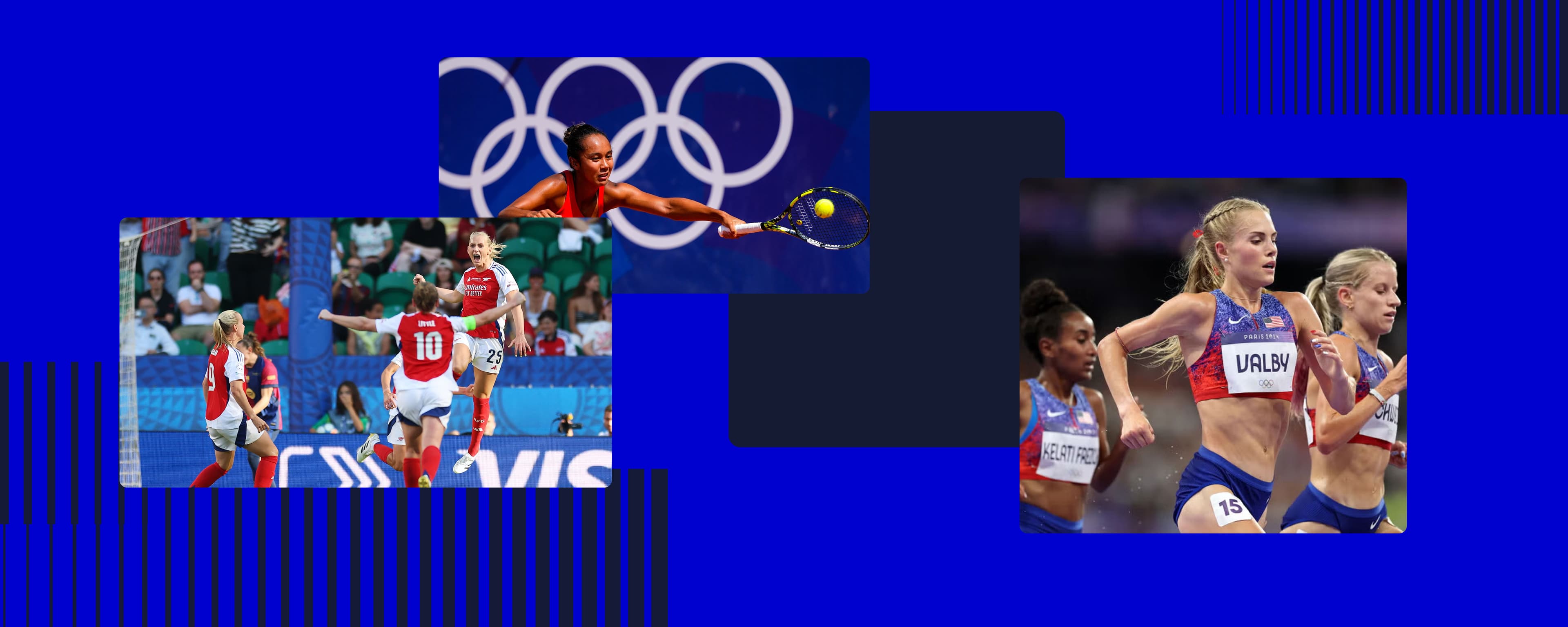

International women’s sports are undergoing a cultural and commercial renaissance. Once sidelined in the broader sports ecosystem, women’s competitions now occupy centre stage with record-breaking attendance, soaring viewership, and rising global fan engagement.
From primetime WNBA matchups to sellout crowds at the FIFA Women’s World Cup, the world is watching women athletes like never before. Around 3 in 10 US adults follow women’s professional or college sports at least moderately, according to the NORC Center for Public Affairs Research. A similar study by S&P Global found that those who tune into women’s sports are avid viewers, following more than six other sports leagues, compared to an average of 2.5 among the overall population.
Women’s sports events are not only drawing millions of new fans—across genders, generations, and geographies—but also creating massive, multi-market opportunities for brands looking to connect with audiences in meaningful ways.
Here, we unpack the cultural drivers, commercial potential, and strategic pathways that make international women’s sports a new frontier for international sports marketing.
Women’s elite sports generated an estimated $2.4 billion in global revenue in 2025 and are projected to reach $3 billion in 2026, a 25% year-over-year increase, according to Deloitte. That is a 340% rise since 2022. TV advertisers spent 139% more on women’s sports in 2024, reaching $244.4 million, per EDO. Still, that figure accounts for only 3% of all TV ad spend on live sports, underscoring a rapidly scaling media environment with high fan engagement but limited ad saturation. With basketball, soccer, rugby, and college sports all setting attendance and viewership records at once, the opportunity spans a full calendar year, not a single season.
The women’s sports industry has been marked by significant milestones over the last couple of years, showcasing unprecedented viewership gains and media value.
Basketball
Soccer
Rugby
NCAA
And with a full calendar of global events including the FIFA Women’s World Cup, WNBA, UEFA competitions, and the Olympics, advertisers no longer need to limit themselves to brief seasonal windows. There is now an opportunity to plan multi-phase, year-round campaigns that stay connected to fan communities continuously.
$3 billion
$3 billion
$3 billion
In 2026, revenue from women’s elite sports will reach $3 billion
According to the WOmen’s Sport Trust, 86% of sponsors say their partnerships have met or outperformed ROI expectations and a third say their activations delivered better-than-expected results. Ads during women’s sports drove 40% more engagement than primetime TV spots, per EDO. A separate study by Horizon Sports & Experiences reports that 67% of women’s sports fans make a point to support brands that sponsor their favorite teams or athletes. Together, these numbers point to a rare combination: lower ad clutter and stronger measurable return.
For many advertisers, women’s sports offers a more efficient path to impact, with less clutter and greater standout. Sponsors also value the alignment with brand purpose. In the Women’s Sport Trust report, 77% of respondents cited showcasing community or social responsibility as their primary reason for entering a sponsorship agreement, followed by reinforcing brand image (68%). In a market less saturated, ads in women’s sports feel more values-driven, less like an interruption and more like participation, which is key for brands focused more on affinity and long-term value.
Real-time activation means letting live game data, not a pre-set media plan, drive bidding, creative, and channel decisions as a match unfolds. FANHub adjusts bidding, creative, and channel priority based on real-world triggers, such as an unexpected tournament upset or a star player’s injury, shifting spend and messaging within minutes. That responsiveness needs to extend beyond the broadcast, since nearly 8 in 10 US adults use a second screen while watching TV.
A late-game goal, a rivalry fixture, or an unexpected result all shift fan attention, search volume, and social activity in real time. If a team advances unexpectedly at the Women’s Rugby World Cup, FANHub can boost spend in relevant regions, swap in creative that reflects the new storyline, and match messaging to fan sentiment, without manual intervention.
Fans are also watching on more than one screen. Second-screen use is highest among Gen Z and millennials, who make up a large share of women’s sports fans, so brands need to show up in short-form video, mobile, and social alongside the broadcast. Platforms that centralize buying, targeting, and creative make it possible to ride a viral moment, like a buzzer beater, across every channel without delay.
Use this checklist to turn the data above into a working campaign plan.
1. Set the objective. Decide upfront whether the campaign is built for reach, consideration, or performance. This determines which moments and formats matter later in the plan.
2. Define the audience. Identify who you’re reaching beyond the core fanbase. Women’s sports audiences skew younger and more cross-generational than many advertisers assume, so plan for reach across genders and age groups, not just existing fans.
3. Set moment triggers from live data. Use real-time feeds, such as player tracking, scoring plays, or milestone stats, to define the specific in-game moments that will trigger creative or spend changes.
4. Prepare creative variants and augmented overlays. Build a small set of creative variants in advance, tied to the triggers above, so the system has something ready to serve the moment a trigger fires.
5. Plan channels beyond TV. Map out where the campaign shows up once the trigger fires, including CTV, social, mobile, and search, so the moment carries across every screen a fan might be using.
6. Set measurement upfront. Decide which outcomes you’re tracking, such as engagement lift, brand search, or sentiment, before the campaign launches, so results can be compared against expectations.
Women’s sports offer a powerful platform for purpose-driven messaging, resonating on values like equity, empowerment, and authenticity. With no shortage of powerful storytelling moments, women’s sports have opened the door for previously untapped advertiser categories, from makeup and hair brands to health and fertility services.
However, the challenge for brands and agencies is to avoid replicating old playbooks. The tools exist to plan better, activate more intelligently, and engage audiences that are actively looking for brands that show up with intention.