56%
56%
56%
EU consumers prefer relevant ads over random ones
59%
59%
59%
US CTV users prefer seeing ads relevant to the content
70%
70%
70%
European and APAC consumers believe ads on sponsored events are trustworthy and innovative
Meaghan Yuen
For advertisers, live sports provide a unique and increasingly rare environment to engage with their audiences. Fans tune in together in real-time, sharing emotions, and their attention is firmly locked on the action.
Yet, most sports campaigns still resemble any other media buy. They use fixed creative, broad targeting and lack connection to the intensity unfolding on-screen. This means brands are missing the bigger picture: the true value of sport isn’t just the size of the audience, but the narrative and data created with every play, pass and point.
Live sports data can transform how advertisers deliver memorable brand messages. Instead of static placements, marketers can build campaigns that adapt to the moment, from display ads that celebrate a match-winning penalty to push notifications that invite fans to increase their wager as the momentum shifts.
This guide explores why live sports data is advertising’s most powerful tool, how to use it and what it means for industries, such as iGaming, that depend on fan engagement.
Live sports consistently command the largest, most reliable audiences on television and streaming platforms. Nearly one in six sports fans globally tune in live at least weekly—and even more in the US—according to a 2024 survey by IBM and Morning Consult.
Unlike scripted TV shows and movies, which can be easily paused or watched passively, sports unfold unpredictably. This creates emotional highs and lows that fans experience together, translating into an opportunity for brands to align in a positive way. As a result, ad placements go beyond generating impressions and intersect with moments of high energy, alertness and sentiment.
Whether you’re selling soft drinks, sneakers or sportsbook offers, the ability to meet fans during high-attention windows in sports is what makes it such a valuable medium.
Research from LG Ad Solutions found that 64% of US connected TV (CTV) viewers say they’re likely to pay attention to ads while watching live sports, while 80% say they remember ads seen during live sports programming.
However, the data shows that generic campaigns are no longer enough. Consumers are actively seeking ads that feel less like interruptions and more like a natural part of the experience.
The same survey reported that 74% wished TV ads during live sports events were more relevant. That’s where live data comes in, enhancing timing and context. Reaching fans in the exact second their team scores or misses, for example, is the chance for brands to become a part of the story.
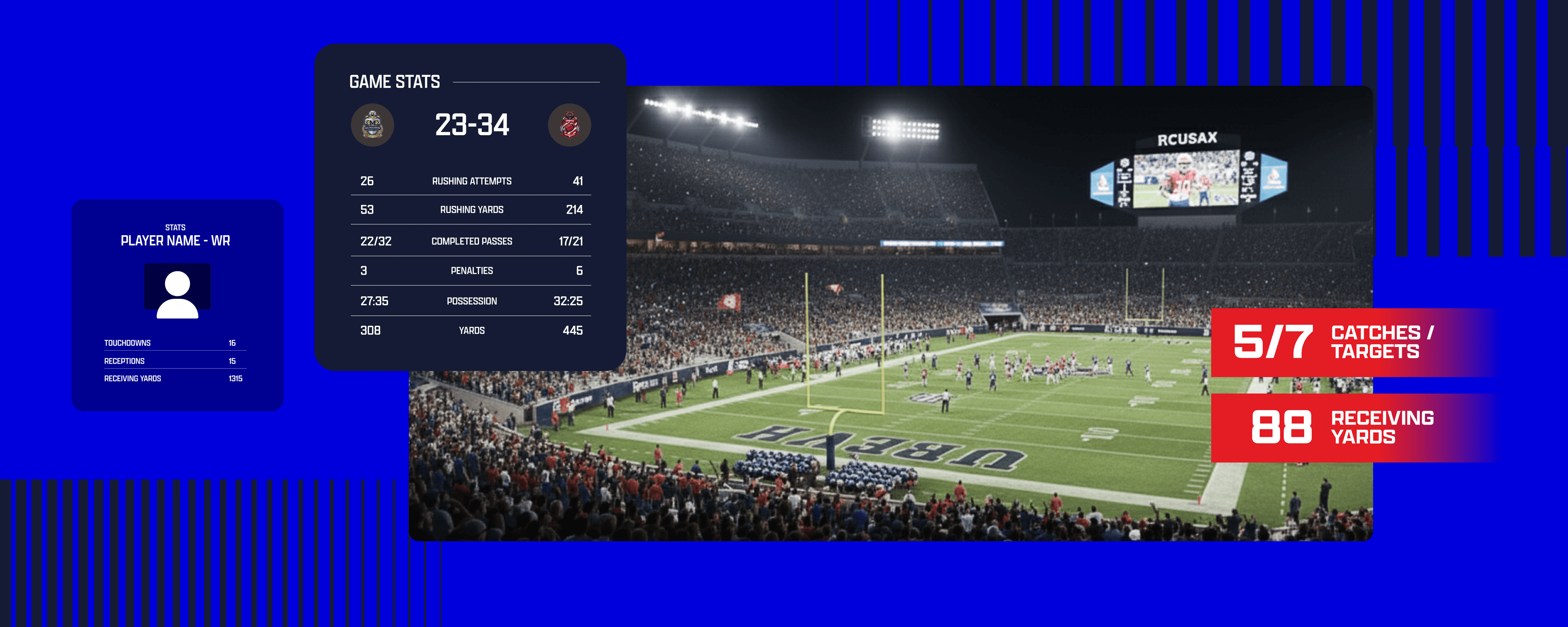
Every game produces a stream of events—points scored, player milestones, possession changes. With live data, these become real-time triggers that can shape how and when ads appear. Instead of pre-set campaigns, advertisers can deliver messages that respond to the action.
The real breakthrough lies in contextual relevance. For example, a generic ad for a betting app may get noticed, but an ad that adapts to say “Fuel your team’s comeback” right as the underdog ties the game acts as part news alert and part urgent CTA, resonating far more deeply. Injecting more emotional weight into the ads elevates it from background noise to part of the live experience.
For this to work, latency and reliability matter. An ad celebrating a goal that appears 15 seconds late feels forced. In fact, research from Sportmonks has shown that a delay of more than 300 milliseconds can be noticeable and annoying to users.
That’s why official data sources, which deliver verified information as the game unfolds, are crucial in ensuring brands stay in sync with the game.
Fans may accept ads as part of the sports experience, but they expect those ads to feel less like random interruptions and more like timely and meaningful content. The gap between what consumers want and what they actually get poses a major opportunity for advertisers who know how to use live data.
Adobe and Econsultancy report that 71% of consumers worldwide expect brands to anticipate their needs and deliver offers at the right moment; yet only 31% say brands actually succeed. That 40-point gap highlights how far most advertisers still have to go in delivering on relevance.
The appetite for the right message at the right time is seen in individual markets, too:
Live sports data offers a path for brands to deliver what their audiences want. By linking campaigns directly to the game’s flow, advertisers can deliver messaging that not only feels relevant but also anticipated.
56%
56%
56%
EU consumers prefer relevant ads over random ones
59%
59%
59%
US CTV users prefer seeing ads relevant to the content
70%
70%
70%
European and APAC consumers believe ads on sponsored events are trustworthy and innovative
The global sports betting market is projected to reach over $223 billion by 2030, with Europe leading the way. The industry is highly competitive, and real-time data is no longer a luxury—it’s a necessity for driving performance and standing out.
Here’s how iGaming operators can use live data to boost key performance indicators (KPIs) like cost per acquisition (CPA) and lifetime value (LTV):
DCO ads use sports data to automatically adjust in real-time, with flexible components—including copy, images, logos and CTAs—updating based on the game. The result is fresh, relevant and memorable creative that doesn’t require your team to work around the clock making hundreds of ad variations. This approach enables brands to create hundreds of ad variations instantly, eliminating the need for manual effort.
For example, if a player scores, your ad can update with their photo or stat line, or a team-related promotion. And as the official data partner to hundreds of leagues, Genius Sports is supercharging these multi-channel campaigns across all major sports.
In-play betting is the largest segment of the sports betting market. Fans are glued to their phones, creating a massive opportunity for second-screen engagement. Here, sports data APIs enable advertisers to create entirely new interactive environments that extend beyond the broadcast, with real-time statistics and win probabilities surfaced in apps and second-screen dashboards.
These immersive extensions provide fans with reasons to stay connected while opening up new, sponsorable surfaces for brands. For iGaming operators, Genius Sports APIs enable instant odds updates, making the betting experience more fluid and engaging.
Social media is a critical component of this second-screen strategy. Platforms like Snapchat, with their younger demographic and emphasis on short-form video and data-driven activations, are ideal for real-time engagement. For example, an iGaming company could use dynamic data and odds to power a video ad that features live, updated odds or a quick parlay bet triggered by a major play. This turns a passive scroll into an interactive, monetisable experience.
Instead of running generic campaigns, brands can utilise live sports data—such as a goal, timeout, or momentum shift—to trigger ads that feel timely and relevant.
For sportsbooks, the potential is even greater. Data can fuel smarter acquisition campaigns—delivering offers exactly when fans are most engaged—and support long-term retention through gamification, personalisation, and ongoing interaction. The opportunity is not just to reach fans, but to activate them responsibly.
When ads match the pace and emotion of live sports, they perform better. Partnering with the right data provider or media service makes it possible to deliver that experience ethically and at scale.