Key Takeaways: Dynamic Creative Optimization in Sports Marketing
What it is: DCO is technology that automatically assembles and serves personalised ad creative in real time, using live game data, fan behaviour, and context so each fan sees a message matched to their moment.
How it works in 3 steps:
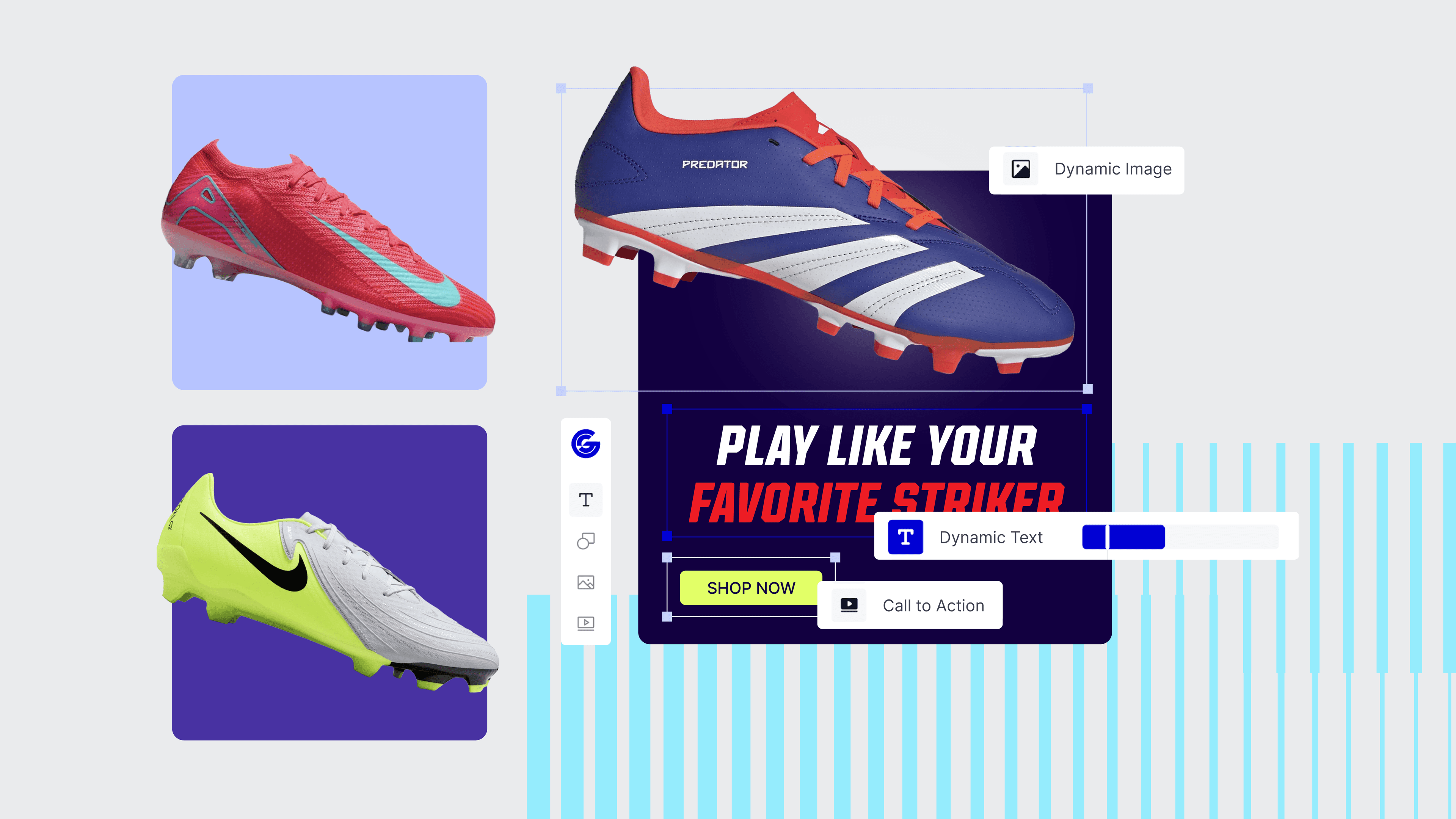
- A modular creative template supplies swappable assets (headline, image, CTA, team logo).
- Live data inputs — scores, player milestones, fan location/affinity, device, time of day — feed the system.
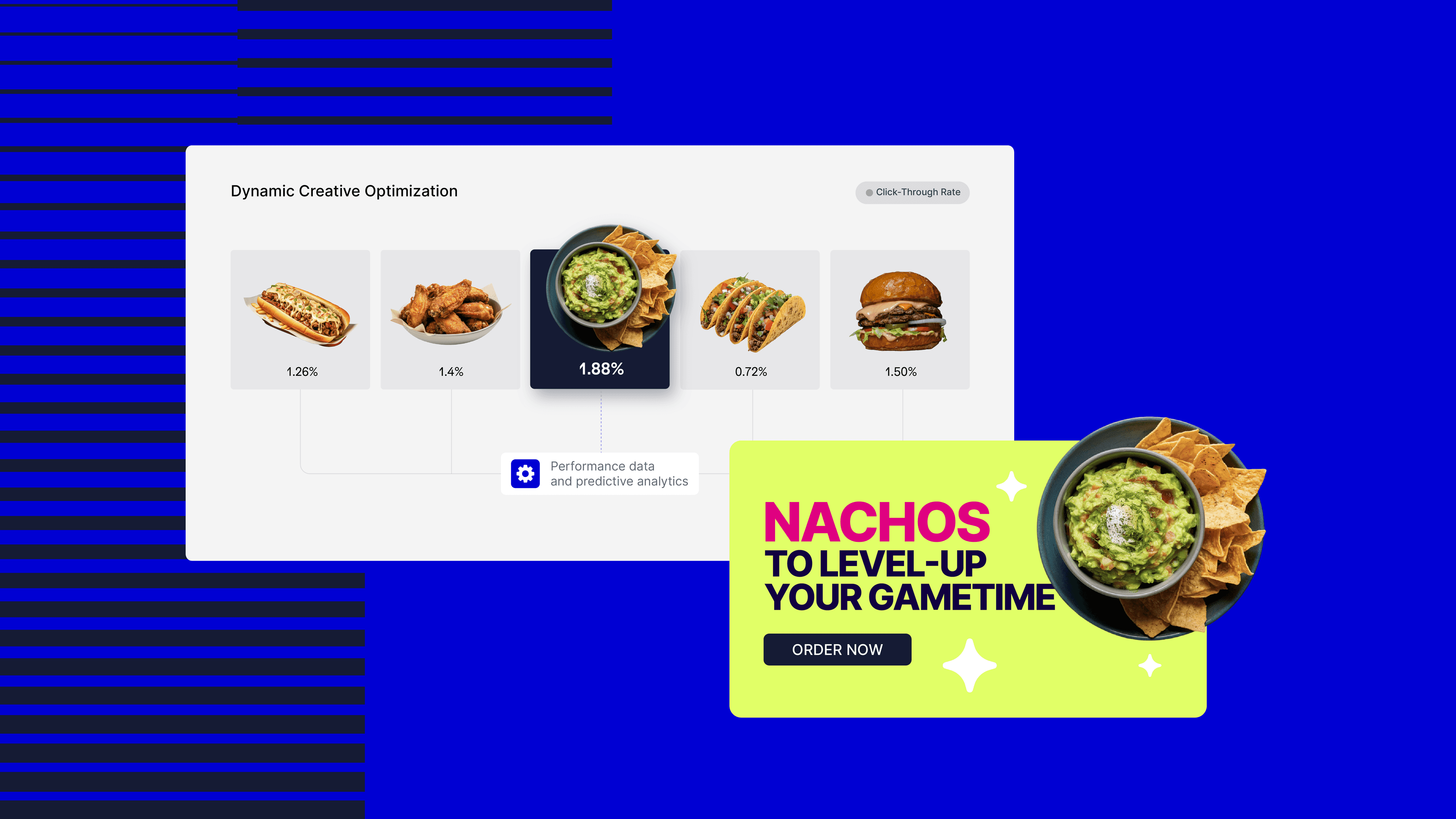
- A decisioning engine selects and serves whichever variant best fits the campaign’s goal (CTR, engagement, or conversion).
Top 3 benefits for sports advertisers: real-time relevance during fleeting game moments, personalisation at scale without rebuilding assets, and continuous, always-on optimization of live campaigns.
When to use it: pre-game for hype and awareness, in-game for reactive, moment-triggered creative, and post-game for conversion- and recap-driven offers.
The stat behind it: According to Attentive’s 2025 Consumer Trends Report, 1 in 4 consumers say they’re less likely to purchase after receiving a generic brand message — a gap DCO is built to close in the fast-moving, always-live sports environment.
For advertisers, the goal is no longer simply being seen. It’s being seen in the right moment in the right place, and with a message that matters to that unique consumer.
More than a quarter (26%) of consumers worldwide say they’re less likely to make a purchase if they receive a generic brand message, compared to more personalised communications such as restock reminders, according to Attentive.
Fueling the personalisation that consumers have come to expect is dynamic creative optimisation (DCO). As a longstanding tool for retail and travel marketers, DCO is fast becoming essential in the sports arena, thanks to the integration of live data, including data on anything that may influence key match moments, such as scores, major plays, and even weather.
For sports marketers, the need to leverage data for relevancy is particularly high. Live sports create fleeting, high-impact windows of attention; so as fans are more likely to engage right in the moment, the pressure is on for marketers to adapt creative quickly as the action unfolds.
Here, we break down what DCO is, how it works, and how sports marketers can use it to drive performance across channels.
What is DCO and How Does it Work?
DCO is the tool that automates the assembly and delivery of personalised ad creative in real time, based on data signals such as audience segment, location, device or real-time contextual inputs.
DCO relies on three core components: a flexible creative template, real-time data inputs, and a decisioning engine that selects which creative variant to serve based on set campaign goals.
1. Creative Template (Modular Assets):
Definition: A library of swappable ad components — headline, image, call-to-action, background colour, team logo — that assembles into thousands of variants from a single build.
DCO starts with a modular template. Each component of the ad—headline, image, call-to-action, background colour, team logo—is treated as a swappable asset. These variables are then assembled dynamically at the moment the ad is served, which relieves creative teams from manually building multiple versions of static ads.
This makes it possible to generate thousands of creative variations from a single template, tailored to individual users or real-time events, without needing to rebuild or re-upload new files every time something changes.
Sports example: A milestone-trigger template swaps in “Celebrate Mahomes’ 250th career touchdown pass” copy and a Kansas City colour palette the instant the stat is confirmed.
2. Data Inputs (Live Scores, Fan Affinity, Device/Time):
Definition: The real-time and historic signals — game state, fan team affinity, location, device, time of day, and past behaviour — that tell the system which moment a fan is actually in.
DCO ads are informed by data signals such as:
- Live game stats, such as scores or player milestones
- Fan location and team affinity
- Device type or time of day
- Behavioural signals like past purchases or video views
Sports example: A rivalry geo-message reads a fan’s location and team affinity to serve “Go Knicks!” to a viewer in New York and a rival-market message to a viewer in Boston watching the same broadcast.
3. Decisioning / Optimisation (Objective-Aligned Variant Selection):
Definition: The engine that continuously tests creative-and-data combinations against a stated goal — CTR, engagement, or conversion — and shifts delivery toward whichever variant is winning.
Platforms running DCO campaigns continuously test which combinations of assets, copy, and data signals yield the best results—whether it’s CTR, engagement, or conversion—and prioritise high-performing variants accordingly.
Sports example: If a “Buy now” CTA outperforms “Learn more” during close games in the fourth quarter, the engine automatically serves more of the higher-converting variant for the rest of the campaign.
The result? Instead of relying on one static ad to speak to everyone, DCO allows marketers to generate thousands of creative variations, each tailored to a different audience segment or moment.
These can range from simple changes like location-based messaging (“Go Knicks!” for a New York viewer) to complex combinations involving real-time sports data (e.g., “Celebrate Mahomes’ 250 career touchdown passes with 10% off Kansas City merch”).
Why DCO is Crucial in Sports Marketing
Today, many sports campaigns still rely on static ad units and basic demographic targeting. These creatives lack contextual relevance and miss the narrow window when fans are most receptive.
DCO’s potential in sports advertising has largely been underutilized, even though it may be one of the best-fit use cases for the format.
What sets sports advertising apart from other industries is its rate and speed of change. A creative asset that makes sense pre-game may be irrelevant five minutes after kickoff. Similarly, a fan might be less inclined to celebrate by buying food or alcohol if their favourite team is losing. DCO gives marketers a framework to adapt automatically, so creative responds to the pace of the game.
Benefits of DCO in Sports Marketing
DCO solves some of the most persistent challenges in sports advertising, delivering:
- Real-time relevance: Most creative production cycles can’t keep up with live sports. DCO eliminates the lag, enabling creative to update automatically based on what’s happening in the game—whether it’s a buzzer-beater, a red card, or a player hitting a stat milestone. This matters most on the channels where sports viewing is shifting: for example, ads in streaming-exclusive NFL games were 66% more effective on average than the cable-and-broadcast average, per EDO data cited by MNTN.
- Personalisation at scale: Without DCO, personalizing creative means expensive and lengthy production timelines. DCO makes large-scale personalisation not only possible, but operationally sustainable for sports brands running national or global campaigns.
- Continuous optimisation: Marketers can get more out of their programmatic investment with DCO, as algorithms automatically test and learn which ads drive performance. There’s no need to relaunch or rebuild assets mid-flight.
Strategies to Activate DCO in Sports Advertising
When done right, DCO is more than an automation tool—it’s a creative strategy built for speed, scale, and real-time fan behaviour. But to get there, sports advertisers need to rethink how they use data, where they deploy creative, and how campaigns respond to the action.
Activate First-Party Fan Data Through FANHub
With FANHub, advertisers can maximise the benefits of DCO and fan data. Whether it’s team preferences, game predictions, or content interactions, these signals can trigger creative content tailored to each fan. For example, a fan who predicted the Celtics to win should see different ad messaging after a victory than someone who backed the losing side.
The key is to stop treating fan data as an afterthought and begin designing creative logic around it. FANHub not only collects fan signals, but it also translates them into addressable moments. With DCO layered on top, those moments become creative triggers, executed at scale.
Let Live Game Data Drive the Creative
Sports advertising still treats live moments as content—something to wrap messaging around. DCO lets those moments be the messaging. A last-minute goal, a stat milestone, or a red card doesn’t need to wait for the post-game report. It can trigger new creative instantly while fan attention is still high.
For example, when a player hits a milestone—say, receives a red card in football—that can prompt a reactive message from a challenger brand, deployed immediately after the foul.
It just requires creative thinking upfront: identifying which moments are high-value, which are emotionally resonant, and how those moments can shape the message. It’s not about flooding every ad with live data. It’s about knowing which signals matter and designing a system that can respond automatically.
Think About Creative Across Channels
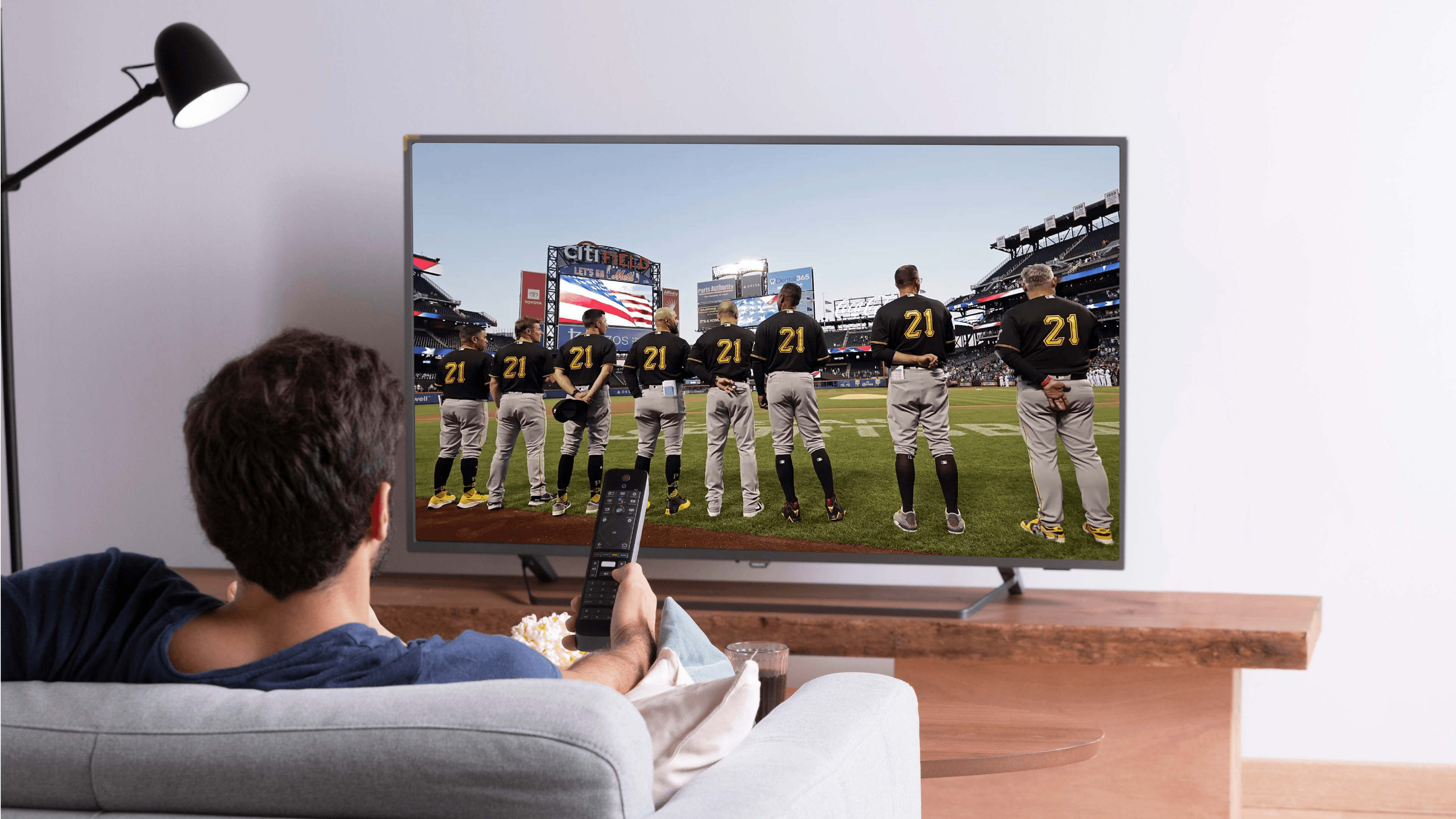
DCO doesn’t have to be limited to banner ads. Social and connected TV (CTV) are high-impact environments for sports fans, and DCO allows creative to evolve across those channels based on live context and behaviour.
Effective DCO campaigns are those that stitch together the full media experience. For example, a message that appears pre-game on CTV can lead to an update on mobile, then shift to a reactive message on social once the score is final.
FANHub’s integration across both programmatic and paid social platforms makes this possible, ensuring that audience segments and data triggers remain consistent as the campaign travels across screens. For advertisers, this means no more siloed buys with mismatched messaging. Instead, fans get a unified, real-time experience that reflects the game, the platform, and their behaviour.
A Smarter Approach to Creative in Sports Advertising
DCO offers a way to bridge the gap between data, media, and messaging, enabling advertisers to deliver relevant creative content without relying on tedious, manual work.
DCO isn’t a standalone tactic, however. Brands are embedding it into campaign planning, creative production, and media buying from the start. And they’re aligning it with platforms like FANHub to ensure that personalisation and scale aren’t at odds.
FAQs
Dynamic remarketing re-serves ads based on a user’s past on-site behaviour, such as a product they viewed, and is common in e-commerce. DCO in sports goes further by also drawing on live game data — scores, milestones, weather — so creative can change moment-to-moment during a live event, not just react to a past site visit.