126%
126%
126%
Tom’s Watch Bar saw a 126% increase in visits from college sports fans during March Madness
34%
34%
34%
College basketball fans spend 34% more per visit to Buffalo Wild Wings during March Madness
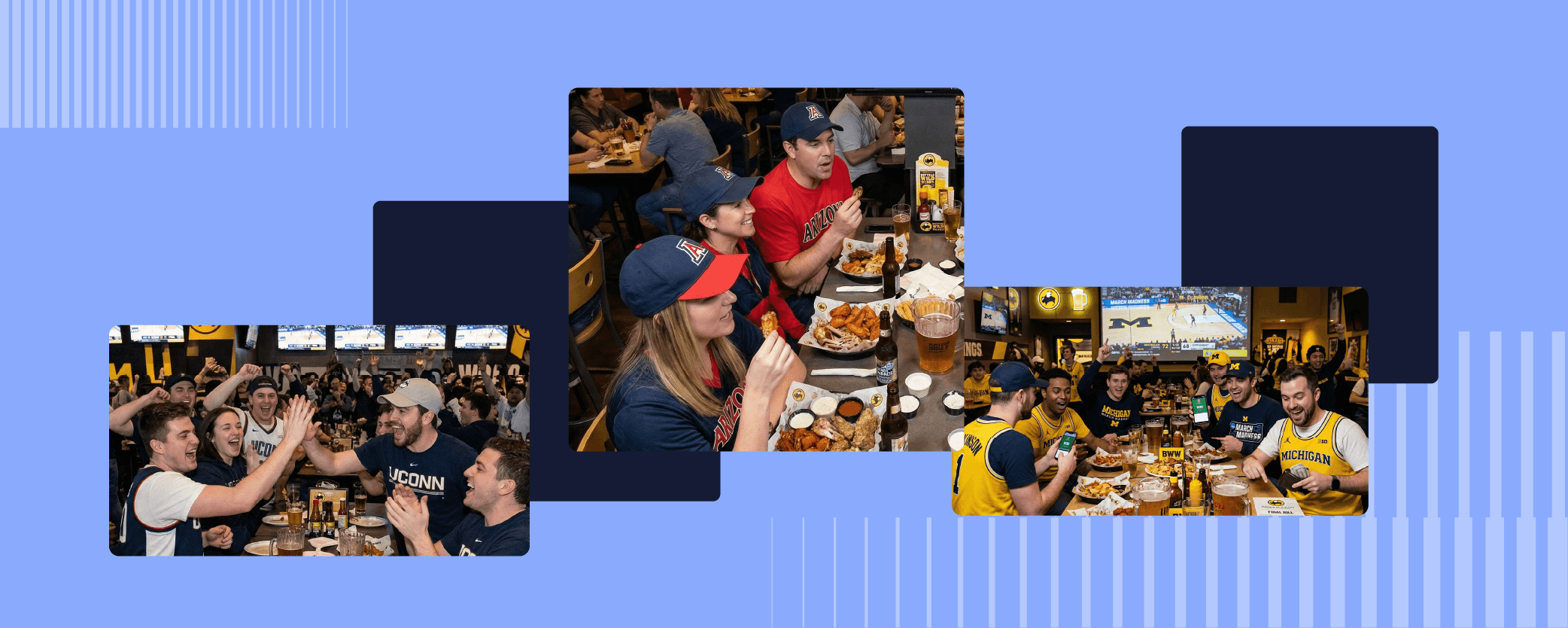
For a few weeks every spring, March Madness reshapes the rhythm of American social life. Brackets fill out, group chats explode, and fans across the country make plans for where they’ll watch the games.
And as we once again saw this year, while UCLA and Michigan were crowned champions, those plans usually involve a sports bar.
The NCAA tournament is widely considered one of the busiest periods of the year for sports-focused restaurants. But the real story isn’t necessarily about attracting new customers. Instead, March Madness reveals something more valuable: how deeply engaged fans change their behavior when the moments are bigger and the stakes are highest.
When the games begin, fans show up and spend differently. And Genius Sports addressable audience data reveals exactly how brands benefit from aligning with spring’s biggest cultural draw.
To understand how fan behavior shifts during March Madness, we tapped into the Genius Sports fan data cloud to analyze in-person purchase activity across three key audience segments — general sports fans, college sports fans, and college basketball fans — comparing the four-week tournament window with the period leading up to it.
What emerges is a clear pattern: the tournament drives meaningful increases in both footfall and spend at sports-oriented dining venues, but not always in the same way.
Tom’s Watch Bar stands out as a clear destination for fans during the tournament. Visits from college sports fans increase by more than 126%, as fans gather to watch multiple games in a communal setting. At the same time, those fans spend 18% more per visit, reflecting longer stays and more engaged viewing experiences. In simple terms, Tom’s wins on traffic. When fans are deciding where to watch, they choose environments built for the moment.
Buffalo Wild Wings tells a slightly different story. While visits to the chain from college sports fans increased by 45% (far less than Tom’s), the shift is in spending behavior was far more pronounced. College basketball fans spend 34% more per visit during the tournament compared to their typical dining patterns. Rather than dramatically increasing visit frequency, fans are simply spending more each time they go. For Buffalo Wild Wings, March Madness shows up less in foot traffic and more in tab size.
126%
126%
126%
Tom’s Watch Bar saw a 126% increase in visits from college sports fans during March Madness
34%
34%
34%
College basketball fans spend 34% more per visit to Buffalo Wild Wings during March Madness
Across the broader restaurant landscape, March Madness redirects existing demand.
Among fans who follow the tournament, our data shows 8–12% of dining decisions are directly influenced by March Madness. At first glance, that may seem modest. But in an industry defined by tight margins and fierce competition, even small shifts in behavior can translate into significant revenue gains. The key insight is not how often fans dine out, but how they behave when they do.
During the tournament, fans:
That behavioral shift creates a concentrated window of opportunity for brands that understand their audience.
March Madness highlights a broader truth about sports and consumer behavior: the most valuable audiences are often the ones already engaged.
Major cultural moments, from March Madness to the World Cup and the Super Bowl, attract and intensify attention. Fans become more intentional about where they spend their time and money, and brands that can identify and activate those audiences gain a measurable advantage.
This is where fan intelligence becomes critical.
By understanding not just who fans are, but how they behave in high-intent moments, brands can:
The data shows that winning during March Madness is about being relevant to the fans who are most ready to engage, which requires a deep understanding of who fans are and how they use their purchase power.
By combining real-time sports data with fan intelligence, brands can reach high-intent audiences at peak moments of attention, when engagement and spending behavior are at their highest. As the exclusive distributor of official NCAA data, Genius Sports captures every play from courtside, powering media partners with premium, official data feeds.
March Madness’s greatest value is amplifying the value of existing fans.
Tom’s Watch Bar wins by capturing increased fan footfall, while Buffalo Wild Wings wins by driving higher spend per visit. Both outcomes are powered by the same underlying force: highly engaged sports fans making more intentional decisions during a peak cultural moment.
For brands, the lesson is clear: The biggest opportunities aren’t always about reaching new audiences. They’re about understanding the ones you already have, and showing up for them in the moments that matter most.
Ready to identify and activate your most valuable fans in the moments that matter most? Discover yours with Genius Sports’ Audience Explorer.