3.1
3.1
3.1
goals per game (Opening 20 matches of World Cup 2026)
Dmitri Agapov

What have we learned so far at the World Cup 2026? Dmitri Agapov, Head of Trading at Genius Sports shares the major trends from the opening World Cup games, from how hydration breaks have affected stoppage time to the impact of mismatches on goal expectancies.
The opening games of the 2026 FIFA World Cup have presented traders with a fresh set of challenges. Firstly, there’s adapting to the new competition rules, and then there’s pricing an expanded 48-team tournament with notable mismatches and the potential for upsets.
Luckily, we’ve pulled the latest learnings and insights straight from our football trading desk. Here are three lessons from the group stage so far.
Traders will remember the volatility caused by match lengths at the 2022 World Cup. England’s opening game against Iran lasted more than 117 minutes, and the stoppage time directive regularly pushed matches well beyond the 100-minute mark.
With mandatory hydration breaks introduced in each half this year, many expected match duration to again be high. Markets such as Total Goals and Next Goalscorer are highly sensitive to additional playing time.
So far, however, that hasn’t really happened but there’s signs this is changing.
Until last night, Brazil versus Morocco was the only outlier, featuring ten minutes of second half stoppage time.
Given that three minutes per match is reserved for the hydration breaks, referees are only adding around 1 minute in the first half and 3.5 minutes in the second for other stoppages. That’s broadly in line (or a bit less) than other major domestic competitions.
This suggests FIFA’s new time-management measures are having the intended effect. Countdown protocols for substitutions, throw-ins, goal kicks and medical treatment appear to be reducing delays and limiting the amount of stoppage time required.
However, last night’s matches saw 8 minutes of 2nd half stoppage time added in France vs Senegal and 10 minutes in Austria vs Jordan, so trades should continue to assess stoppage time throughout the tournament. On the first few matches, we noticed that towards the end of normal time, some bookmakers appeared to price up Overs Goals markets in anticipation of more added time.
Our new stoppage time trading parameter does this automatically and dynamically estimates predicted stoppage time each game. It has accurately forecasted the effect of hydration breaks and stoppage time so far.
At face value, last night’s 0-0 draw between Cape Verde and Spain seemed to challenge fears that a 48-team tournament would produce one-sided group games, but the reality is more nuanced.
With several nations qualifying for the World Cup for the first time, pricing teams with limited competitive history against elite opposition can make pre-tournament ratings less reliable.
An example from the 2022 World Cup is Qatar. As the hosts entered the tournament without a qualifying campaign, it proved difficult for traders to assess their relative strength. They were 2-0 down within 30 minutes of their opening match and ultimately lost all three group games.
3.1
3.1
3.1
goals per game (Opening 20 matches of World Cup 2026)
The 2026 tournament has averaged 3.1 goals per game so far, compared to 2.5 during the entire group stage in Qatar. However, 50% matches have actually fallen below goal expectations based on our trading models’ pricing, so this figure has been boosted by a handful of high-scoring results, including Germany’s 7-1 victory over Curaçao and Sweden’s 5-1 win over Tunisia.
Some of the perceived minnows also appear to be more competitive than expected. Aside from Cape Verde’s headline draw, Switzerland, tipped by many as dark horses, were held 1-1 by Qatar, while Haiti, the tournament’s second-lowest ranked side, pushed Scotland all the way in a narrow defeat.
However, just because results haven’t been as one-sided as anticipated, doesn’t mean other markets haven’t.
Available in our betbuilder solution, MultiBet, we are trading a range of Shots markets at the tournament, and in some matches, shots have been well above expectations. Traders should be ready to adjust shots lines, especially at the beginning of a match, if a lower-ranked nation is defending very deep and conceding lots of possession.
As the first round of fixtures concludes, traders will have a much clearer understanding of these lesser-known teams and can begin recalibrating expectancies for the remaining group matches.
"Historically, extremely wet conditions can suppress scoring rates and make life more difficult for favourites, with implications for Total Goals and Match Result markets."

Dmitri Agapov
Head of Trading, Genius Sports
Dmitri Agapov
Head of Trading, Genius Sports
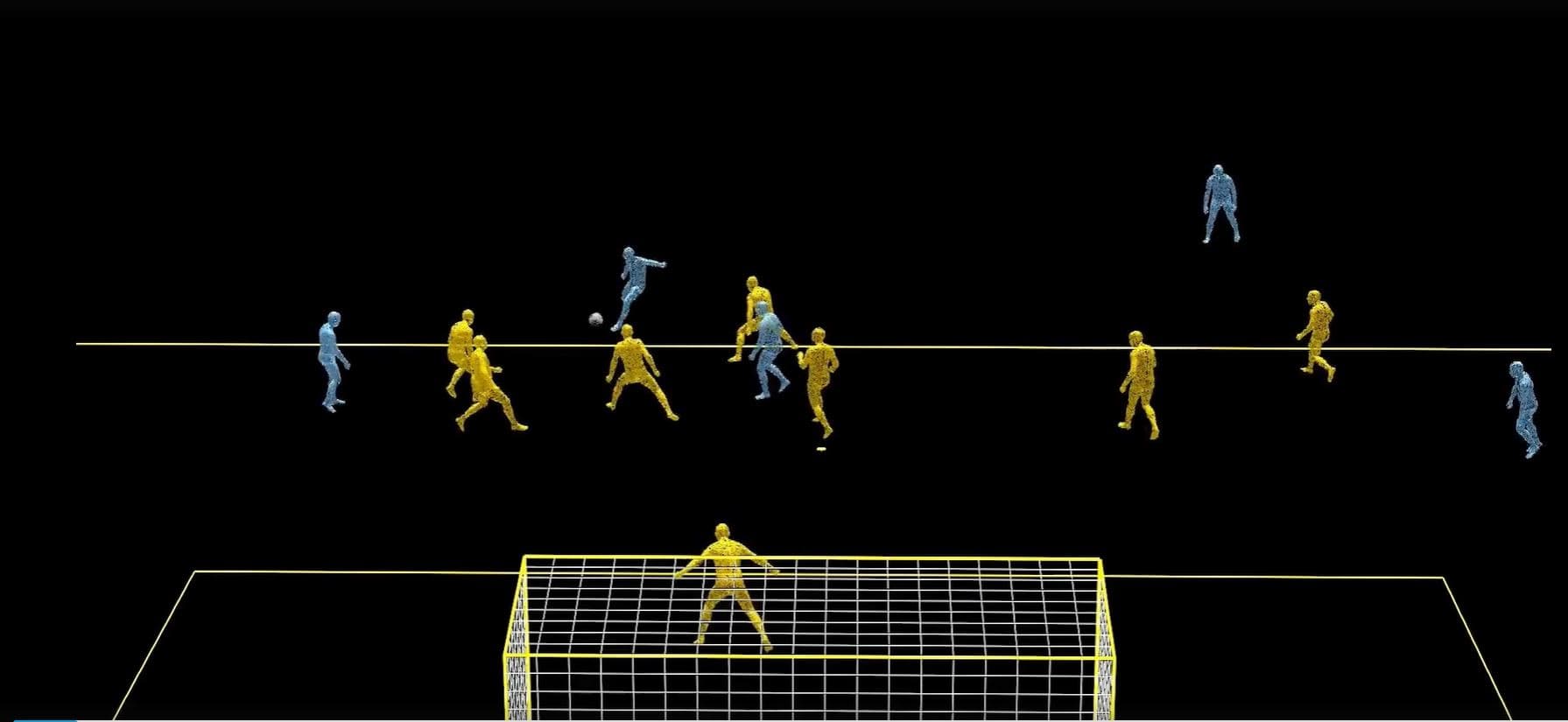
Two major pre-tournament discussion points were the expanded use of VAR and the impact of summer conditions across North America.
VAR can now intervene in additional situations, including incorrectly awarded corners, mistaken identity incidents and second-yellow-card scenarios. So far, its impact has been relatively limited.
The most notable example came when Miguel Almirón was booked for simulation after Tim Ream had initially been shown a yellow card. While a couple of corners were overturned in the Spain game, the checks were completed in a matter of seconds and did not impact our market uptime.
Across all VAR checks, review times have averaged between one and two minutes, broadly consistent with other major competitions. However, this remains an area worth monitoring. The Almirón incident highlighted some uncertainty around how the new protocols should be applied, raising the possibility of longer delays as officials become more familiar with edge cases.
Weather was also expected to play a significant role. Several matches have already been played in temperatures above 30°C, but it remains difficult to isolate the effect on performance, particularly during the group stages when matches are less intense.
Heavy rain and storms that are typical in North America during summer may prove more consequential from a trading perspective. Historically, extremely wet conditions can suppress scoring rates and make life more difficult for favourites, with implications for Total Goals and Match Result markets.
We’ll be back later in the tournament with more insights from the trading room.